
Winter Road Salt Paint Damage Explained
 South East Detail Professional Automotive Detailing
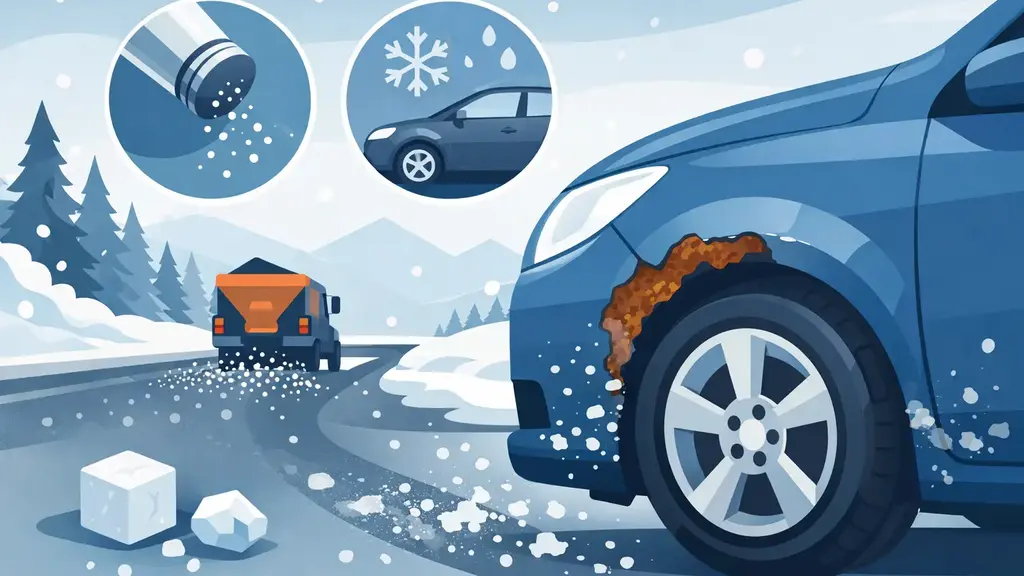
You often see the first signs of winter road salt paint damage before you notice the dirt itself. The gloss looks flatter, lower panels feel rough to the touch, and brightwork starts to lose its clean finish. For many vehicles across West Sussex and Surrey, that build-up is not just cosmetic. Left sitting on paintwork, trims and wheel faces, winter contamination can shorten the life of the finish and make spring correction far more involved than it needed to be. What winter road salt paint damage actually looks like Most owners expect salt to affect the underside of a car, but the visible damage usually begins higher up. The front bumper, lower doors, rear quarters and tailgate pick up a constant spray of salty road film. That film does not stay neatly on the surface. It clings to moisture, traps grime and allows contamination to dwell for longer than ordinary dirt. At first, the symptoms can seem minor. Paint loses clarity, darker colours look greyed over, and wheels become harder to clean properly. Over time, that same layer can leave staining on sensitive finishes, dry out exterior plastics and increase the risk of corrosion around chips, scratches and exposed edges. If your vehicle already has stone chips on the bonnet, wheel arch lips or lower sills, winter conditions make them more vulnerable. Salt itself does not magically strip healthy paint in one go, but it creates the conditions for existing weaknesses to worsen quickly. Why road salt is so aggressive on paintwork Road salt is used because it lowers the freezing point of water and helps keep roads safer. The problem for your vehicle is that salty residue attracts and holds moisture. Instead of drying cleanly, surfaces stay damp for longer, especially in cold weather when evaporation is slow. That matters because prolonged dampness encourages corrosion and allows grime to bond more stubbornly to the finish. Add traffic film, grit and repeated wet-dry cycles, and the paintwork is dealing with far more than a bit of winter mud. The lower half of the vehicle effectively gets sandblasted and chemically stressed at the same time. There is also a practical issue with washing in winter. Many people delay cleaning because the weather is poor, the car looks dirty again within a day, or hosepipes are less appealing in January than they are in June. The result is longer dwell time for harmful contamination. In detailing terms, dwell time is often the difference between a straightforward maintenance wash and a surface that now needs decontamination, polishing or remedial protection. It is not just the paint at risk When clients ask about winter road salt paint damage, the paint is usually the immediate concern, but it is only part of the picture. Salt residue can affect alloy wheels, brake components, trim pieces, badges, rubber seals and exposed metal fixings. On prestige vehicles, satin trims, gloss black accents and intricate wheel finishes can all show wear sooner if winter contamination is left to sit. Convertible roofs and door shuts also deserve attention. Salt-laden grime can gather in seams and drains, where it is less visible and more likely to remain undisturbed. The difference between temporary dullness and real damage Not every winter-worn car has permanent paint damage. Sometimes the finish simply looks tired because it is coated in bonded contamination. A safe decontamination wash can restore much of the gloss. In other cases, the salt has highlighted deeper issues that were already present, such as neglected protection, etched contamination, or corrosion beginning around chips and edges. A useful way to think about it is this: salt often exposes weakness rather than creating every problem from scratch. Well-maintained paint with strong protection tends to cope far better. Unprotected paint, aged sealants, damaged clear coat and existing stone chips do not. This is why two cars driven on the same roads can come through winter very differently. Storage, mileage, wash frequency, protection levels and even where the car is parked all make a difference. How to reduce winter road salt paint damage The most effective protection is consistency. A single thorough wash in February is better than none, but regular safe cleaning through winter is what keeps contamination from becoming a bigger issue. Frequent rinsing of the lower bodywork and wheel areas helps remove the heaviest deposits before they harden on the surface. Proper pre-washing matters too. If gritty salt film is rubbed across the paint during a rushed wash, you replace chemical contamination with swirls and marring. That is why a careful, paint-safe process is so important in colder months. Protection also plays a major role. A quality wax, sealant or ceramic coating creates a sacrificial layer between the finish and the elements. No protection makes a car immune to winter roads, but it does make contamination easier to remove and reduces the chance of residue clinging aggressively to the surface. Washing more is good. Washing badly is not. There is a trade-off here. Owners sometimes react to winter grime by washing more often, but with poor technique. Automatic car washes, dirty sponges and strong retail traffic film removers can do more visible harm than the salt they were meant to tackle. If the finish is already refined or corrected, preserving that standard through winter means using methods that clean thoroughly without inflicting avoidable abrasion. This is particularly relevant on black, navy and other darker paint colours where wash marks show quickly. The areas people miss most often The panels you can see are only part of what needs attention. Salt gathers heavily behind the wheels, along the lower edges of doors, inside fuel filler areas and around badges and trim lines. Door shuts, boot shuts and the inner lips of wheel arches are common blind spots. These overlooked areas matter because contamination left there tends to spread back onto clean surfaces. They also hold moisture longer, which is exactly what you want to avoid during colder months. Wheels deserve special mention. Brake dust and salt are a particularly unpleasant combination, and once baked on, they become much harder to remove safely. Regular wheel cleaning through winter is not about vanity. It is preventative care. When protection makes the biggest difference If your vehicle has a ceramic coating, winter maintenance is usually easier because contamination releases more readily and gloss holds up better between washes. If it wears a wax or sealant, the car can still be well protected, but the layer may need topping up more often depending on mileage and conditions. If the car has no meaningful protection at all, winter road salt paint damage becomes more likely simply because the finish is fully exposed. You may notice roughness sooner, water behaviour drops off quickly, and the car becomes harder to clean each time. For owners planning ahead, the best time to protect paintwork is before the worst of winter arrives. For owners already in the middle of it, the next best time is now. Even mid-season, a proper decontamination and fresh protection layer can make the remaining months easier on the vehicle. Signs your car needs more than a standard wash If the paint still feels rough after washing, the gloss remains muted, or contamination appears to be stuck in the lower panels, a maintenance wash may no longer be enough. The same applies if you can see corrosion beginning around stone chips or the wheel finish is holding heavy staining. That does not always mean major correction is required. Sometimes the answer is a professional decontamination and protective treatment. In other cases, especially on older or prestige vehicles where finish quality matters, light machine polishing may be the right next step before protection is reapplied. This is where tailored care matters. A daily-driven family SUV, a cherished convertible and a high-value performance car all face winter exposure differently, and the right solution depends on use, finish type and condition. A smarter approach for busy owners For many people, the challenge is not knowing that salt is harmful. It is finding time to stay ahead of it. That is where a professional mobile detailing service becomes genuinely practical rather than indulgent. Having the vehicle safely washed, inspected and protected at home or at work removes the usual friction, which means the car is more likely to receive the care it needs at the right time. For clients across Midhurst, Chichester, Petworth, Haslemere and Arundel, South East Detail often sees the same pattern each year: vehicles that are washed consistently and protected properly come out of winter in noticeably better condition, with less correction needed in spring and stronger long-term finish quality. A winter car does not need to look neglected, and it certainly should not be left to absorb months of contamination unchecked. The right care is less about chasing perfection in bad weather and more about protecting what you have worked hard to maintain.
You often see the first signs of winter road salt paint damage before you notice the dirt itself. The gloss looks flatter, lower panels feel rough to the touch, and brightwork starts to lose its clean finish. For many vehicles across West Sussex and Surrey, that build-up is not just cosmetic. Left sitting on paintwork, trims and wheel faces, winter contamination can shorten the life of the finish and make spring correction far more involved than it needed to be. What winter road salt paint damage actually looks like Most owners expect salt to affect the underside of a car, but the visible damage usually begins higher up. The front bumper, lower doors, rear quarters and tailgate pick up a constant spray of salty road film. That film does not stay neatly on the surface. It clings to moisture, traps grime and allows contamination to dwell for longer than ordinary dirt. At first, the symptoms can seem minor. Paint loses clarity, darker colours look greyed over, and wheels become harder to clean properly. Over time, that same layer can leave staining on sensitive finishes, dry out exterior plastics and increase the risk of corrosion around chips, scratches and exposed edges. If your vehicle already has stone chips on the bonnet, wheel arch lips or lower sills, winter conditions make them more vulnerable. Salt itself does not magically strip healthy paint in one go, but it creates the conditions for existing weaknesses to worsen quickly. Why road salt is so aggressive on paintwork Road salt is used because it lowers the freezing point of water and helps keep roads safer. The problem for your vehicle is that salty residue attracts and holds moisture. Instead of drying cleanly, surfaces stay damp for longer, especially in cold weather when evaporation is slow. That matters because prolonged dampness encourages corrosion and allows grime to bond more stubbornly to the finish. Add traffic film, grit and repeated wet-dry cycles, and the paintwork is dealing with far more than a bit of winter mud. The lower half of the vehicle effectively gets sandblasted and chemically stressed at the same time. There is also a practical issue with washing in winter. Many people delay cleaning because the weather is poor, the car looks dirty again within a day, or hosepipes are less appealing in January than they are in June. The result is longer dwell time for harmful contamination. In detailing terms, dwell time is often the difference between a straightforward maintenance wash and a surface that now needs decontamination, polishing or remedial protection. It is not just the paint at risk When clients ask about winter road salt paint damage, the paint is usually the immediate concern, but it is only part of the picture. Salt residue can affect alloy wheels, brake components, trim pieces, badges, rubber seals and exposed metal fixings. On prestige vehicles, satin trims, gloss black accents and intricate wheel finishes can all show wear sooner if winter contamination is left to sit. Convertible roofs and door shuts also deserve attention. Salt-laden grime can gather in seams and drains, where it is less visible and more likely to remain undisturbed. The difference between temporary dullness and real damage Not every winter-worn car has permanent paint damage. Sometimes the finish simply looks tired because it is coated in bonded contamination. A safe decontamination wash can restore much of the gloss. In other cases, the salt has highlighted deeper issues that were already present, such as neglected protection, etched contamination, or corrosion beginning around chips and edges. A useful way to think about it is this: salt often exposes weakness rather than creating every problem from scratch. Well-maintained paint with strong protection tends to cope far better. Unprotected paint, aged sealants, damaged clear coat and existing stone chips do not. This is why two cars driven on the same roads can come through winter very differently. Storage, mileage, wash frequency, protection levels and even where the car is parked all make a difference. How to reduce winter road salt paint damage The most effective protection is consistency. A single thorough wash in February is better than none, but regular safe cleaning through winter is what keeps contamination from becoming a bigger issue. Frequent rinsing of the lower bodywork and wheel areas helps remove the heaviest deposits before they harden on the surface. Proper pre-washing matters too. If gritty salt film is rubbed across the paint during a rushed wash, you replace chemical contamination with swirls and marring. That is why a careful, paint-safe process is so important in colder months. Protection also plays a major role. A quality wax, sealant or ceramic coating creates a sacrificial layer between the finish and the elements. No protection makes a car immune to winter roads, but it does make contamination easier to remove and reduces the chance of residue clinging aggressively to the surface. Washing more is good. Washing badly is not. There is a trade-off here. Owners sometimes react to winter grime by washing more often, but with poor technique. Automatic car washes, dirty sponges and strong retail traffic film removers can do more visible harm than the salt they were meant to tackle. If the finish is already refined or corrected, preserving that standard through winter means using methods that clean thoroughly without inflicting avoidable abrasion. This is particularly relevant on black, navy and other darker paint colours where wash marks show quickly. The areas people miss most often The panels you can see are only part of what needs attention. Salt gathers heavily behind the wheels, along the lower edges of doors, inside fuel filler areas and around badges and trim lines. Door shuts, boot shuts and the inner lips of wheel arches are common blind spots. These overlooked areas matter because contamination left there tends to spread back onto clean surfaces. They also hold moisture longer, which is exactly what you want to avoid during colder months. Wheels deserve special mention. Brake dust and salt are a particularly unpleasant combination, and once baked on, they become much harder to remove safely. Regular wheel cleaning through winter is not about vanity. It is preventative care. When protection makes the biggest difference If your vehicle has a ceramic coating, winter maintenance is usually easier because contamination releases more readily and gloss holds up better between washes. If it wears a wax or sealant, the car can still be well protected, but the layer may need topping up more often depending on mileage and conditions. If the car has no meaningful protection at all, winter road salt paint damage becomes more likely simply because the finish is fully exposed. You may notice roughness sooner, water behaviour drops off quickly, and the car becomes harder to clean each time. For owners planning ahead, the best time to protect paintwork is before the worst of winter arrives. For owners already in the middle of it, the next best time is now. Even mid-season, a proper decontamination and fresh protection layer can make the remaining months easier on the vehicle. Signs your car needs more than a standard wash If the paint still feels rough after washing, the gloss remains muted, or contamination appears to be stuck in the lower panels, a maintenance wash may no longer be enough. The same applies if you can see corrosion beginning around stone chips or the wheel finish is holding heavy staining. That does not always mean major correction is required. Sometimes the answer is a professional decontamination and protective treatment. In other cases, especially on older or prestige vehicles where finish quality matters, light machine polishing may be the right next step before protection is reapplied. This is where tailored care matters. A daily-driven family SUV, a cherished convertible and a high-value performance car all face winter exposure differently, and the right solution depends on use, finish type and condition. A smarter approach for busy owners For many people, the challenge is not knowing that salt is harmful. It is finding time to stay ahead of it. That is where a professional mobile detailing service becomes genuinely practical rather than indulgent. Having the vehicle safely washed, inspected and protected at home or at work removes the usual friction, which means the car is more likely to receive the care it needs at the right time. For clients across Midhurst, Chichester, Petworth, Haslemere and Arundel, South East Detail often sees the same pattern each year: vehicles that are washed consistently and protected properly come out of winter in noticeably better condition, with less correction needed in spring and stronger long-term finish quality. A winter car does not need to look neglected, and it certainly should not be left to absorb months of contamination unchecked. The right care is less about chasing perfection in bad weather and more about protecting what you have worked hard to maintain.