


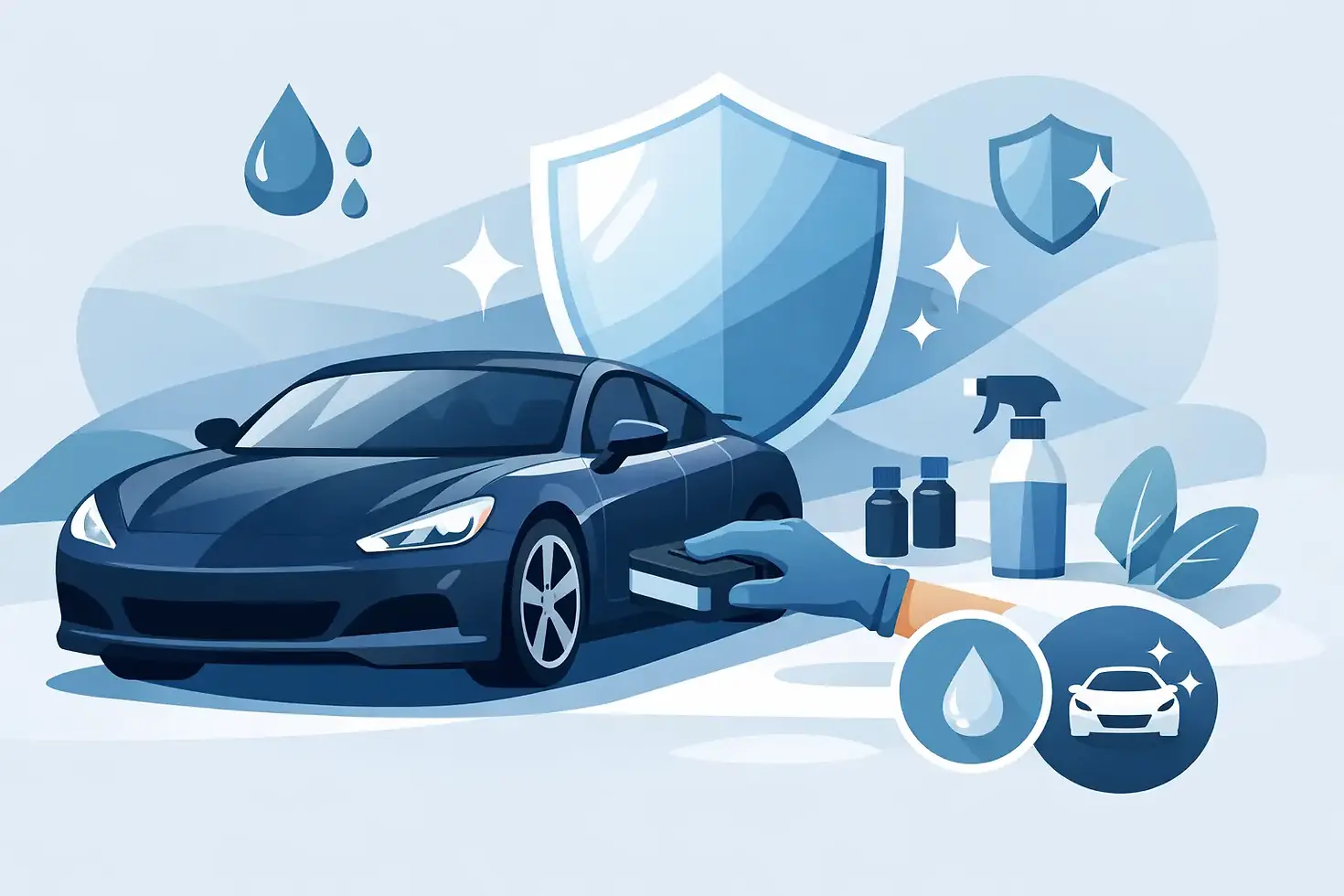
Guide to Ceramic Paint Protection
- South East Detail Professional Automotive Detailing

- Jun 28
- 6 min read
A freshly detailed car has a look that owners recognise immediately - sharper gloss, richer depth, and paintwork that feels properly finished rather than simply clean. The real question is how long that finish lasts once the school run, motorway miles, rain, tree sap and winter grime start building up. This guide to ceramic paint protection explains what a coating actually does, what it does not do, and how to decide whether it is the right investment for your vehicle.
What ceramic paint protection actually is
Ceramic paint protection is a liquid coating applied to the exterior surfaces of a vehicle, where it cures into a durable protective layer bonded to the paintwork. Unlike a traditional wax, which sits on the surface and wears away relatively quickly, a ceramic coating is designed for longer-term protection and a much stronger bond.
Its main job is to make the paint more resistant to contamination and easier to maintain. Water beads and runs off more readily, road film is less eager to cling to the surface, and washing becomes safer and more efficient when the car is looked after correctly. The finish also tends to look glossier and more refined, which is one of the reasons ceramic coatings have become so popular with owners of prestige vehicles and daily drivers alike.
That said, there is a difference between marketing claims and reality. A ceramic coating is not a force field. It will not make paint scratch-proof, stop stone chips, or remove existing swirl marks. What it does offer is a measurable improvement in chemical resistance, ease of cleaning, gloss retention and day-to-day protection.
A guide to ceramic paint protection benefits
For most owners, the biggest benefit is reduced maintenance. Dirt still lands on the car, especially on lower panels and the rear end, but it releases more easily during a proper wash. That means less aggressive scrubbing, fewer opportunities to inflict wash marks, and a cleaner finish with less effort.
There is also the visual side. Ceramic-coated paint tends to hold a crisper, more reflective appearance, particularly on darker colours where depth and clarity matter. On well-prepared paintwork, the finish can look noticeably more polished and consistent.
Protection from the elements is another genuine advantage. Bird droppings, bug residue, tree sap, hard water spotting and traffic film can all do damage if left sitting on bare paint. A coating provides a sacrificial barrier that helps slow down that process. It does not mean you can ignore contamination for weeks, but it gives the paintwork a far better chance.
For owners thinking about resale or long-term ownership, that matters. Keeping paint in stronger condition over the years supports the vehicle’s appearance and can help preserve value. This is especially relevant if the car lives outside, covers regular mileage, or spends much of its time exposed to the weather.
Preparation matters more than the coating itself
One of the most common misunderstandings in any guide to ceramic paint protection is the idea that the coating is the whole service. In truth, the preparation is often the most important part.
Before any coating is applied, the vehicle should be thoroughly washed, decontaminated and assessed. Fallout removal, tar removal and paint cleansing are standard parts of the process. If the paint has swirl marks, haze, oxidation or light scratches, machine polishing may be needed to refine the finish before protection is applied.
This stage matters because a ceramic coating locks in the condition beneath it. If the paint is already marked, dull or poorly finished, the coating will preserve that as well. If the paint has been corrected properly, the coating helps maintain a much higher standard of finish.
That is why quoted prices can vary. A newer vehicle with relatively clean paint may need far less correction than an older family car that has seen years of automatic car washes. The right approach depends on the actual condition of the vehicle, not just its age or badge.
Is ceramic paint protection worth it?
For many owners, yes - but it depends on expectations.
If you want a car that is easier to wash, better protected from everyday contaminants and capable of holding a polished, showroom-quality appearance for longer, ceramic paint protection is usually a worthwhile investment. It suits busy professionals, families and enthusiasts who want lasting results without constant re-waxing.
If, however, the car is rarely cleaned properly, spends long periods under trees, or is run through harsh brush washes every fortnight, the benefits will be reduced. A ceramic coating rewards good maintenance. It lowers the effort required, but it does not eliminate the need for care.
There is also the question of ownership. If you tend to change vehicles every year, a high-end long-term coating may not make as much sense as it would on a car you plan to keep for several years. On the other hand, if the vehicle is a valued daily driver, a lease car you want to keep looking smart, or a prestige car where finish quality matters, the case becomes much stronger.
How long does ceramic paint protection last?
Durability varies according to the product used, the preparation work, the environment the car lives in and how it is maintained afterwards. Some entry-level coatings and spray-applied ceramics offer shorter-term protection, while professional-grade coatings can last for years when applied correctly.
The important point is that stated lifespan and real-world performance are not always the same thing. A coating may technically remain present on the surface for a long time, but if it has been neglected or repeatedly washed badly, its water behaviour, gloss and protective qualities may decline well before the headline figure on the box.
This is where professional application makes a difference. Surface preparation, curing conditions and aftercare advice all influence how well the coating performs over time. A properly installed coating on a well-maintained car will nearly always outperform a rushed application on poorly prepared paint.
What ceramic coating does not protect against
It is worth being clear here, because this is where disappointment usually begins.
Ceramic paint protection does not stop stone chips from motorway driving. It does not make keys, hedge branches or careless washing harmless. It will not hide poor paintwork, and it is not a substitute for paint protection film where impact resistance is the main concern.
It also does not make your vehicle self-cleaning. The car will still get dirty, especially in British weather. Winter salt, rain, mud and road film remain part of everyday driving. The advantage is that cleaning becomes more straightforward, and the surface is better defended while you own it.
Aftercare makes the difference
Once coated, the vehicle still needs correct washing. In fact, aftercare is one of the biggest factors in whether ceramic protection continues to look impressive months down the line.
A gentle hand wash using suitable products is the best route. Harsh chemicals, dirty wash mitts and automatic brush washes can all shorten the life of the coating and mar the finish. Drying matters as well, particularly in hard water areas where mineral spotting can become an issue.
Periodic maintenance is often overlooked. Even coated cars benefit from inspection washes, decontamination where needed and occasional top-up products designed to support the coating’s performance. For owners who want the benefits without the hassle, a structured maintenance plan is often the most sensible option.
Who ceramic paint protection suits best
Ceramic coatings suit a wide range of vehicles, from executive saloons and performance cars to well-used family SUVs. The common thread is not the type of car but the owner’s priorities.
If presentation matters, if preserving value matters, or if convenience matters, ceramic protection makes a lot of sense. It is particularly well suited to drivers who want premium results at home or work without having to keep booking frequent cosmetic treatments just to stay on top of the finish.
For local owners in places such as Midhurst, Chichester, Petworth, Haslemere and Arundel, mobile detailing adds another practical advantage. The vehicle can be professionally prepared and protected without the disruption of arranging transport to and from a fixed unit. For many clients, that convenience is not a bonus. It is the reason the service fits into real life.
Choosing the right service
Not every ceramic coating package is the same, and the best option depends on your vehicle’s condition and your expectations. Some owners need a protection-focused treatment for a newer car that already presents well. Others need paint correction first to bring the finish up to the standard worth preserving.
A good detailer will assess the paint honestly, explain the trade-offs and recommend a package based on the car rather than a generic menu. That is the difference between a coating that merely adds a layer of product and one that genuinely improves how the vehicle looks and behaves over time.
At South East Detail, that approach is central to the service. Premium protection only delivers proper value when the finish underneath has been prepared with care, the coating is applied correctly, and the owner knows how to maintain it afterwards.
If you are considering ceramic paint protection, the best place to start is not with the promise of permanent perfection. It is with a clear view of how you use your car, how you want it to look, and how much ongoing maintenance you realistically want to do. Get that part right, and the coating becomes less of a cosmetic extra and more of a smart long-term decision.


Comments