Ceramic Coating Versus PPF: Which Protects Best?
 South East Detail Professional Automotive Detailing
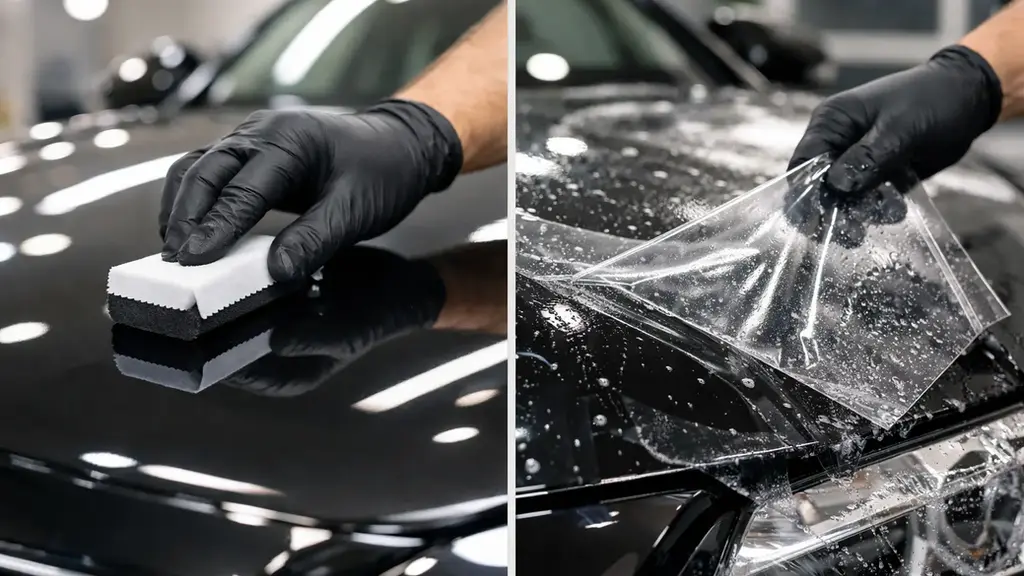
A freshly corrected bonnet can look faultless under a cloudy Sussex sky, then pick up stone chips on the next motorway journey. That is why ceramic coating versus PPF is not simply a question of which product is better. It is about matching the protection to how, where and how often your vehicle is used. Ceramic coatings and paint protection film both preserve paintwork, improve presentation and support long-term vehicle value. Their strengths are very different, however. One creates a hard, glossy protective layer; the other is a physical barrier designed to absorb the damage that would otherwise reach the paint beneath. Ceramic Coating Versus PPF: The Core Difference A ceramic coating is a liquid protection applied to properly prepared paintwork. Once cured, it bonds to the surface and creates a durable, highly hydrophobic finish. Water beads and sheets away more easily, dirt is less likely to cling to the paint, and regular washing becomes more straightforward. The visual result is usually a deeper gloss and a crisp, freshly detailed appearance. PPF, or paint protection film, is a clear polyurethane film applied over the paint. It is considerably thicker than a ceramic coating and is designed to take the impact of road debris, light scuffs and abrasive contamination. Quality films often have self-healing top layers, meaning fine marks can reduce or disappear when exposed to warmth. In simple terms, ceramic coating protects against the things that dull a finish over time. PPF protects against the things that physically strike it. Neither is invincible, and neither removes the need for careful washing, but they solve different problems. What Ceramic Coating Does Best Ceramic coating is an excellent choice for owners who want their car to look consistently well cared for without spending every weekend washing it. Its water-repellent properties make rain, mud, road film and everyday grime easier to remove. This is particularly valuable on dark paintwork, where poor washing habits and ingrained contamination quickly spoil the finish. It also provides useful resistance to UV exposure, bird droppings, tree sap and traffic film. These contaminants can etch or stain unprotected clear coat if left in place, especially through warmer months. A coating gives you more time to remove them safely, although it should never be treated as permission to leave contamination on the vehicle. The aesthetic benefit matters too. After paint correction has removed swirls, hazing and light defects, ceramic coating helps retain that refined, high-gloss finish. It enhances the colour rather than masking poor paintwork, which is why preparation is the most important part of the process. Applying protection over existing defects simply preserves those defects underneath. What ceramic coating does not do is stop stone chips. It can reduce the effect of very light wash marring, but it cannot prevent a sharp impact from a loose stone, a car park knock or grit thrown up by another vehicle. Claims that a coating makes paint scratch-proof should be treated with caution. Where PPF Has the Advantage PPF is the stronger option where impact protection is the priority. The leading edge of a bonnet, front bumper, wing mirrors, sills and rear wheel arches are all exposed to grit, salt, loose chippings and debris. On a daily motorway car, a performance vehicle, or a prestige vehicle with delicate factory paint, these are the areas most likely to show wear first. A well-fitted film forms a sacrificial layer over the paint. Rather than the stone chip breaking the clear coat, the film absorbs the strike. Some marks remain in the film after a severe impact, but replacing a section of film is often preferable to repainting original bodywork. PPF is also useful around door edges, loading areas and high-contact panels. Families may value protection around rear bumper lips where pushchairs, bikes or luggage are regularly loaded. Enthusiasts often choose a front-end installation to keep a low-mileage car looking as close to original as possible. Film quality and installation standards matter greatly. Poorly fitted PPF can show visible edges, trapped contamination, lifting corners or an uneven finish. It requires a clean, controlled fitting environment and careful panel preparation, particularly on complex bumpers and sharply styled vehicles. The best result should be difficult to notice unless you know where to look. Appearance, Feel and Day-to-Day Care Both options can make a vehicle easier to maintain, but ceramic coating has the more obvious effect during washing. Water behaviour is dramatic, drying is simpler and the gloss can feel noticeably sharper. For owners who enjoy a clean car but have limited time, that reduced effort is a meaningful benefit. PPF has improved substantially in clarity and gloss, particularly with premium gloss films. On most modern paintwork, a high-quality installation will preserve the appearance of the panel rather than change it. Matte and satin films are also available for owners who want a different visual finish, though this is a styling decision as much as a protection decision. PPF is not maintenance-free. It still needs safe washing, prompt removal of bird droppings and sensible drying methods. Harsh chemicals, abrasive brushes and neglected contamination can shorten its life or spoil its appearance. Ceramic coating is likewise not a substitute for correct wash technique. A dirty sponge and an automatic brush wash can still create damage on protected paint. For the best ongoing presentation, use pH-neutral products, avoid aggressive solvent cleaners unless appropriate for the surface, and wash from the least soiled areas down. A professional maintenance valet keeps the protection working as intended while preserving the high-quality finish underneath. Cost and Value: Which Is Worth More? Ceramic coating is generally the more accessible premium protection option. Pricing depends on vehicle size, paint condition, the level of correction required and the durability of the coating selected. The preparation can take longer than the coating application itself, particularly where a vehicle needs swirl removal and refinement before protection. PPF costs more because of the material, precision cutting, fitting time and installation conditions required. A full-car installation represents a significant investment. A partial front-end package, covering the bumper, bonnet section, wings and mirrors, is often the more practical route for owners who want protection where it counts most. Value should not be judged solely by the initial price. If a vehicle regularly travels on A-roads or motorways, PPF on high-impact areas can reduce future paintwork repairs and help preserve original panels. If the priority is a deep gloss, easier maintenance and broad protection against environmental fallout, ceramic coating may deliver the better return. There is also the question of ownership plans. Someone keeping a car for several years may place greater value on preserving the paint from day one. A lease vehicle, a weekend convertible or a carefully maintained family car may benefit more from a ceramic coating and regular maintenance, depending on its condition and use. The Best Option Is Often Both For many prestige, performance and newly delivered vehicles, the most considered approach is not choosing one product over the other. It is using each where it performs best. PPF can be fitted to the vulnerable front-end and high-wear areas, then ceramic protection can be applied to the remaining paintwork and, where suitable, over the film itself. This combination gives impact protection where road damage is most likely, alongside the gloss, water behaviour and easier cleaning associated with ceramic protection. It does cost more initially, but it avoids paying for full-car film where the risk may be lower. It is particularly sensible for vehicles with soft paint, low front bumpers, wide tyres that throw debris along the sills, or paint colours that make stone chips highly visible. White, black and deep metallic finishes all reveal different forms of wear quickly, even if the damage is less noticeable at first glance. How to Choose for Your Vehicle Start with the vehicle's use rather than the marketing claim. A cherished weekend car stored indoors faces a different set of risks from a daily commuter covering 15,000 miles a year. Consider where it is parked, whether it sees regular country roads, how often it travels at motorway speed and whether children, pets or loading duties create wear around particular panels. Choose ceramic coating when your priority is showroom-quality gloss, easier maintenance and reliable protection from weathering and contamination. Choose PPF when preventing stone chips, scuffs and physical damage on vulnerable panels is the main concern. Choose a combination when preserving the vehicle to the highest standard is worth the additional investment. Before either treatment, assess the existing paint honestly. New vehicles can arrive with transport marks, dealership wash swirls and contamination; used cars may need more substantial correction. South East Detail approaches protection as the final stage of careful preparation, so the finish being sealed is worthy of the protection placed over it. The right choice should make owning the vehicle more enjoyable, not create another item on the maintenance list. Protect the areas that face the greatest risk, maintain them properly, and your paintwork will continue to look considered long after the initial detail.
A freshly corrected bonnet can look faultless under a cloudy Sussex sky, then pick up stone chips on the next motorway journey. That is why ceramic coating versus PPF is not simply a question of which product is better. It is about matching the protection to how, where and how often your vehicle is used. Ceramic coatings and paint protection film both preserve paintwork, improve presentation and support long-term vehicle value. Their strengths are very different, however. One creates a hard, glossy protective layer; the other is a physical barrier designed to absorb the damage that would otherwise reach the paint beneath. Ceramic Coating Versus PPF: The Core Difference A ceramic coating is a liquid protection applied to properly prepared paintwork. Once cured, it bonds to the surface and creates a durable, highly hydrophobic finish. Water beads and sheets away more easily, dirt is less likely to cling to the paint, and regular washing becomes more straightforward. The visual result is usually a deeper gloss and a crisp, freshly detailed appearance. PPF, or paint protection film, is a clear polyurethane film applied over the paint. It is considerably thicker than a ceramic coating and is designed to take the impact of road debris, light scuffs and abrasive contamination. Quality films often have self-healing top layers, meaning fine marks can reduce or disappear when exposed to warmth. In simple terms, ceramic coating protects against the things that dull a finish over time. PPF protects against the things that physically strike it. Neither is invincible, and neither removes the need for careful washing, but they solve different problems. What Ceramic Coating Does Best Ceramic coating is an excellent choice for owners who want their car to look consistently well cared for without spending every weekend washing it. Its water-repellent properties make rain, mud, road film and everyday grime easier to remove. This is particularly valuable on dark paintwork, where poor washing habits and ingrained contamination quickly spoil the finish. It also provides useful resistance to UV exposure, bird droppings, tree sap and traffic film. These contaminants can etch or stain unprotected clear coat if left in place, especially through warmer months. A coating gives you more time to remove them safely, although it should never be treated as permission to leave contamination on the vehicle. The aesthetic benefit matters too. After paint correction has removed swirls, hazing and light defects, ceramic coating helps retain that refined, high-gloss finish. It enhances the colour rather than masking poor paintwork, which is why preparation is the most important part of the process. Applying protection over existing defects simply preserves those defects underneath. What ceramic coating does not do is stop stone chips. It can reduce the effect of very light wash marring, but it cannot prevent a sharp impact from a loose stone, a car park knock or grit thrown up by another vehicle. Claims that a coating makes paint scratch-proof should be treated with caution. Where PPF Has the Advantage PPF is the stronger option where impact protection is the priority. The leading edge of a bonnet, front bumper, wing mirrors, sills and rear wheel arches are all exposed to grit, salt, loose chippings and debris. On a daily motorway car, a performance vehicle, or a prestige vehicle with delicate factory paint, these are the areas most likely to show wear first. A well-fitted film forms a sacrificial layer over the paint. Rather than the stone chip breaking the clear coat, the film absorbs the strike. Some marks remain in the film after a severe impact, but replacing a section of film is often preferable to repainting original bodywork. PPF is also useful around door edges, loading areas and high-contact panels. Families may value protection around rear bumper lips where pushchairs, bikes or luggage are regularly loaded. Enthusiasts often choose a front-end installation to keep a low-mileage car looking as close to original as possible. Film quality and installation standards matter greatly. Poorly fitted PPF can show visible edges, trapped contamination, lifting corners or an uneven finish. It requires a clean, controlled fitting environment and careful panel preparation, particularly on complex bumpers and sharply styled vehicles. The best result should be difficult to notice unless you know where to look. Appearance, Feel and Day-to-Day Care Both options can make a vehicle easier to maintain, but ceramic coating has the more obvious effect during washing. Water behaviour is dramatic, drying is simpler and the gloss can feel noticeably sharper. For owners who enjoy a clean car but have limited time, that reduced effort is a meaningful benefit. PPF has improved substantially in clarity and gloss, particularly with premium gloss films. On most modern paintwork, a high-quality installation will preserve the appearance of the panel rather than change it. Matte and satin films are also available for owners who want a different visual finish, though this is a styling decision as much as a protection decision. PPF is not maintenance-free. It still needs safe washing, prompt removal of bird droppings and sensible drying methods. Harsh chemicals, abrasive brushes and neglected contamination can shorten its life or spoil its appearance. Ceramic coating is likewise not a substitute for correct wash technique. A dirty sponge and an automatic brush wash can still create damage on protected paint. For the best ongoing presentation, use pH-neutral products, avoid aggressive solvent cleaners unless appropriate for the surface, and wash from the least soiled areas down. A professional maintenance valet keeps the protection working as intended while preserving the high-quality finish underneath. Cost and Value: Which Is Worth More? Ceramic coating is generally the more accessible premium protection option. Pricing depends on vehicle size, paint condition, the level of correction required and the durability of the coating selected. The preparation can take longer than the coating application itself, particularly where a vehicle needs swirl removal and refinement before protection. PPF costs more because of the material, precision cutting, fitting time and installation conditions required. A full-car installation represents a significant investment. A partial front-end package, covering the bumper, bonnet section, wings and mirrors, is often the more practical route for owners who want protection where it counts most. Value should not be judged solely by the initial price. If a vehicle regularly travels on A-roads or motorways, PPF on high-impact areas can reduce future paintwork repairs and help preserve original panels. If the priority is a deep gloss, easier maintenance and broad protection against environmental fallout, ceramic coating may deliver the better return. There is also the question of ownership plans. Someone keeping a car for several years may place greater value on preserving the paint from day one. A lease vehicle, a weekend convertible or a carefully maintained family car may benefit more from a ceramic coating and regular maintenance, depending on its condition and use. The Best Option Is Often Both For many prestige, performance and newly delivered vehicles, the most considered approach is not choosing one product over the other. It is using each where it performs best. PPF can be fitted to the vulnerable front-end and high-wear areas, then ceramic protection can be applied to the remaining paintwork and, where suitable, over the film itself. This combination gives impact protection where road damage is most likely, alongside the gloss, water behaviour and easier cleaning associated with ceramic protection. It does cost more initially, but it avoids paying for full-car film where the risk may be lower. It is particularly sensible for vehicles with soft paint, low front bumpers, wide tyres that throw debris along the sills, or paint colours that make stone chips highly visible. White, black and deep metallic finishes all reveal different forms of wear quickly, even if the damage is less noticeable at first glance. How to Choose for Your Vehicle Start with the vehicle's use rather than the marketing claim. A cherished weekend car stored indoors faces a different set of risks from a daily commuter covering 15,000 miles a year. Consider where it is parked, whether it sees regular country roads, how often it travels at motorway speed and whether children, pets or loading duties create wear around particular panels. Choose ceramic coating when your priority is showroom-quality gloss, easier maintenance and reliable protection from weathering and contamination. Choose PPF when preventing stone chips, scuffs and physical damage on vulnerable panels is the main concern. Choose a combination when preserving the vehicle to the highest standard is worth the additional investment. Before either treatment, assess the existing paint honestly. New vehicles can arrive with transport marks, dealership wash swirls and contamination; used cars may need more substantial correction. South East Detail approaches protection as the final stage of careful preparation, so the finish being sealed is worthy of the protection placed over it. The right choice should make owning the vehicle more enjoyable, not create another item on the maintenance list. Protect the areas that face the greatest risk, maintain them properly, and your paintwork will continue to look considered long after the initial detail.