


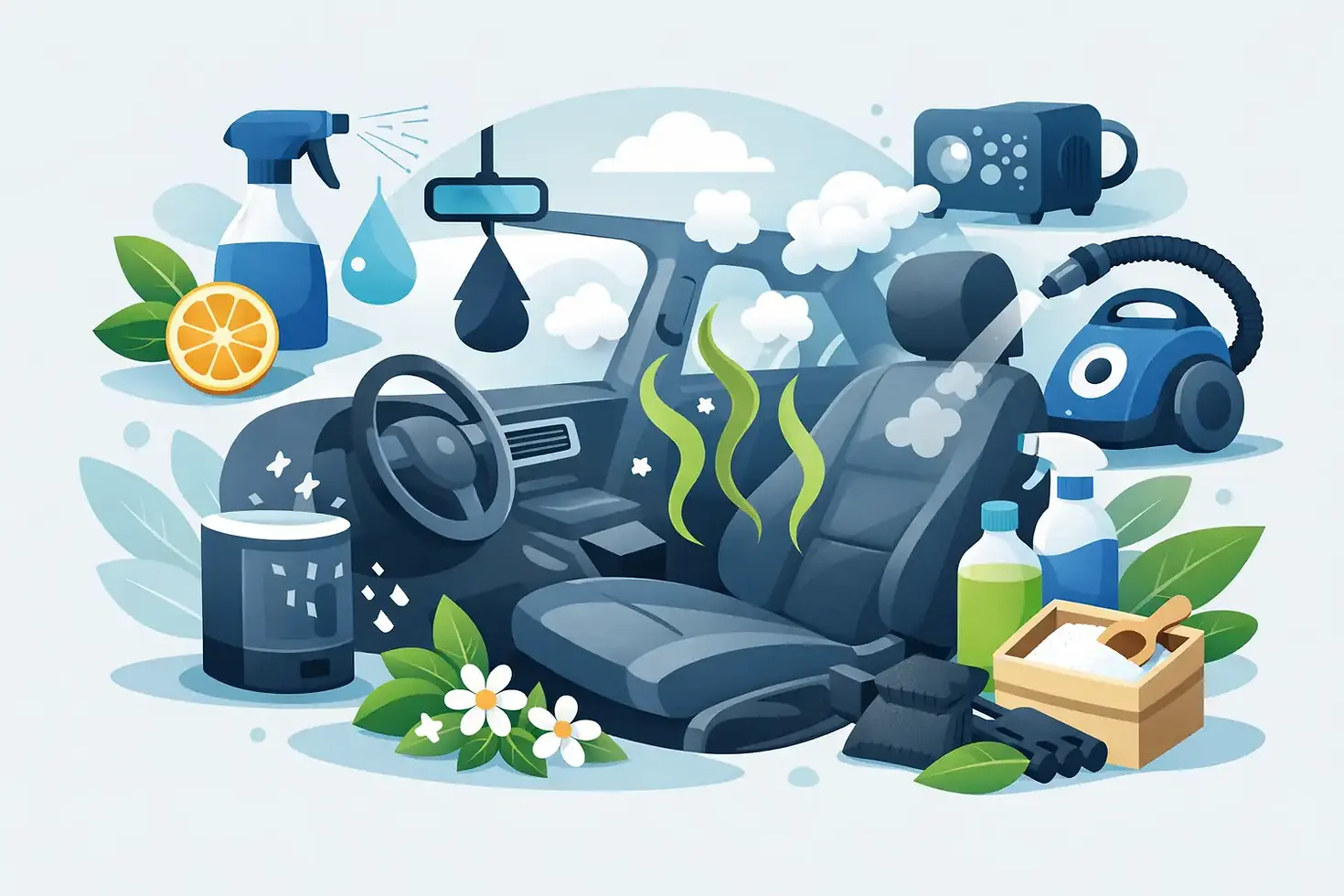
7 Car Odour Removal Techniques That Work

That stale smell when you open the door is rarely just an annoyance. In most cases, it is a sign that something inside the cabin is holding on to moisture, bacteria, smoke residue, food oils or general contamination. The most effective car odour removal techniques do not mask the problem with fragrance. They remove the source, treat the affected surfaces properly and stop the smell from returning a week later.
For busy owners across West Sussex and Surrey, that distinction matters. A car used for school runs, commuting, dogs, gym bags and takeaway coffee builds up layers of odour over time, even when it still looks reasonably tidy on the surface. Premium interior care is about more than appearance. It is about creating a cabin that feels clean, hygienic and properly looked after.
Why some smells keep coming back
Air fresheners often give the impression that the issue has been solved, but they usually sit on top of the real cause. If a vehicle smells damp, there may be moisture trapped in the carpet underlay. If it smells sour, old spills may have soaked into the seats or centre console. Smoke odours are especially persistent because the residue settles into headlinings, vents and soft furnishings.
This is why lasting results depend on diagnosis first. Before choosing a treatment, it helps to know whether the smell is coming from organic matter, bacteria, mould, smoke, pet dander or a mechanical issue such as a blocked air conditioning drain. The right technique for one odour can be ineffective for another.
1. Deep vacuuming and dry debris removal
One of the simplest car odour removal techniques is also one of the most overlooked. Dry debris trapped under seats, in seat rails and between trim panels often causes lingering smells as it breaks down. Crumbs, pet hair, mud and organic matter create an ideal environment for odour to develop, especially when the cabin warms up in the sun.
A proper vacuum is not a quick pass over the mats. It means lifting floor mats, accessing edges, clearing under-seat areas and removing debris from the boot, spare wheel well and seat creases. In family cars and daily drivers, this alone can make a noticeable difference because it removes the material feeding the smell.
2. Fabric shampooing and extraction
If an odour has soaked into seats, carpets or mats, surface cleaning will not be enough. Fabric fibres hold onto spills, moisture and bacteria, and that is where shampooing and extraction come into play. This process loosens contamination from the material and draws it out rather than simply wetting it and leaving it behind.
The trade-off is that fabric extraction needs to be done correctly. Over-wetting the interior can create a fresh damp smell if the vehicle is not dried properly afterwards. Done well, it is one of the most effective ways to treat milk spills, food odours, pet smells and the musty scent that develops in neglected interiors.
For higher-value vehicles, technique matters just as much as the products used. Sensitive materials and premium carpets need a measured approach to avoid overwetting, fibre distortion or patchy results.
3. Leather and hard surface decontamination
Not every smell lives in fabric. Oils from skin, food residue, drink splashes and general grime build up on leather seats, steering wheels, dashboards and door cards. Over time, these surfaces can produce a stale or greasy smell that lingers even after the cabin has been tidied.
A careful interior deep clean removes that film from the surfaces people touch most often. This is especially important in prestige vehicles, where leather and soft-touch trims can hold contamination while still looking presentable at a glance. The aim is not to leave everything shiny or perfumed. It is to return surfaces to a clean, natural finish that feels fresh and properly maintained.
4. Treating the air conditioning system
If the smell is strongest when the fans are on, the issue may be in the ventilation system rather than the cabin fabrics. Air conditioning evaporators can collect moisture and encourage bacterial growth, which leads to that familiar damp or sour smell through the vents.
This is one of the car odour removal techniques that owners often miss because the interior itself may seem clean. Replacing the cabin filter can help, but it is not always the full answer. If bacteria or mould are already present in the system, the evaporator and ducting may need proper treatment.
It is also worth checking whether there is an underlying fault. A blocked drain or persistently damp system can keep reintroducing the smell. If the odour returns quickly after treatment, that usually points to a deeper cause rather than a weak product.
5. Enzyme and bacteria-based odour treatment
For organic smells, enzyme treatments can be far more effective than traditional deodorisers. These products are designed to break down the source of the odour rather than cover it up. They are especially useful for pet accidents, food spills, vomit and other biological contamination.
Where this approach works best is in targeted treatment. Spraying the whole cabin without identifying the affected area is rarely as effective as treating the exact source. If a child has spilled milk into the rear seat bolster, for example, the smell can sit deep within the foam. The treatment needs to reach that area properly or the odour will keep returning on warm days.
This is also where professional assessment saves time. Some smells seem general, but the source is surprisingly localised.
6. Ozone or specialist odour neutralisation
For smoke odours and deeply embedded smells, standard valeting methods may not go far enough. Ozone treatment and other specialist neutralisation methods are designed to tackle odour molecules in the air and across interior surfaces, including areas that are difficult to reach manually.
This can be highly effective, particularly in cars previously owned by smokers. However, it works best as part of a wider process, not as a shortcut. If ash residue, nicotine film and dirty fabrics are still in place, the smell may improve temporarily and then creep back. The cabin needs to be properly cleaned first.
There is also a balance to strike. Strong odour treatments should be handled carefully and used appropriately for the vehicle and the condition of the interior. The goal is a genuinely fresh cabin, not an overpowering chemical smell that replaces one problem with another.
7. Drying and prevention
A surprising number of odour issues come down to trapped moisture. Wet coats, muddy footwear, dog walks, umbrellas and winter condensation all contribute. If carpets or mats never fully dry, the cabin can develop a persistent musty smell even when it is cleaned regularly.
Drying is often the missing stage in DIY odour removal. Mats should be fully dried before going back into the vehicle, and any signs of water ingress should be dealt with quickly. Damp carpet underlay, leaking door seals and blocked drainage points can all undermine otherwise good cleaning work.
Prevention is not glamorous, but it protects the result. Keeping on top of spills, changing cabin filters when needed, avoiding cheap masking sprays and booking periodic interior deep cleans all help preserve a fresher environment long term.
When DIY works and when professional care is worth it
Some odours respond well to home treatment, particularly if they are recent and the source is obvious. A fresh spill on a cloth seat or a bit of lingering pet smell from one muddy journey may be manageable with the right products and enough patience.
Where owners often lose time is with older, layered odours. Smoke, damp, repeated spills and heavily used family interiors tend to need a more methodical process. That usually means proper equipment, safe product selection and the experience to identify where the smell is really coming from.
For customers who want the issue handled without trial and error, a professional interior treatment offers both convenience and better odds of a lasting result. That is particularly true for luxury vehicles, leased cars, family SUVs and daily drivers where cabin condition affects comfort, presentation and future value. At South East Detail, mobile interior care is designed to bring that level of treatment directly to your home or workplace, without the disruption of losing half a day to a fixed-site appointment.
Choosing the right car odour removal techniques for your vehicle
The right approach depends on the cause, the materials inside the car and how long the odour has been there. A damp smell in a hatchback used for dog walks needs a different response from cigarette odour in a recently purchased executive saloon. There is no single miracle product that solves every case.
What does work is a thorough, measured process. Remove debris. Clean the affected materials properly. Treat vents if needed. Neutralise the source rather than masking it. Then make sure the cabin is dry and the original cause has been dealt with.
A clean-smelling interior changes the whole experience of owning a car. It feels better on the school run, more presentable for clients and more in keeping with the standard the vehicle deserves. If the smell has outlasted the air freshener hanging from the mirror, it is usually time to treat the cause, not the symptom.


Comments